How to Choose the Right Septic Tank Pumping Company in Ludowici
Pick a pumper that can prove licensing and legal waste disposal, explains what a full pump-out includes, and puts the scope in writing before the truck arrives.
Published
Part of our Septic Tank Pumping service.
Start with proof of licensing and insurance
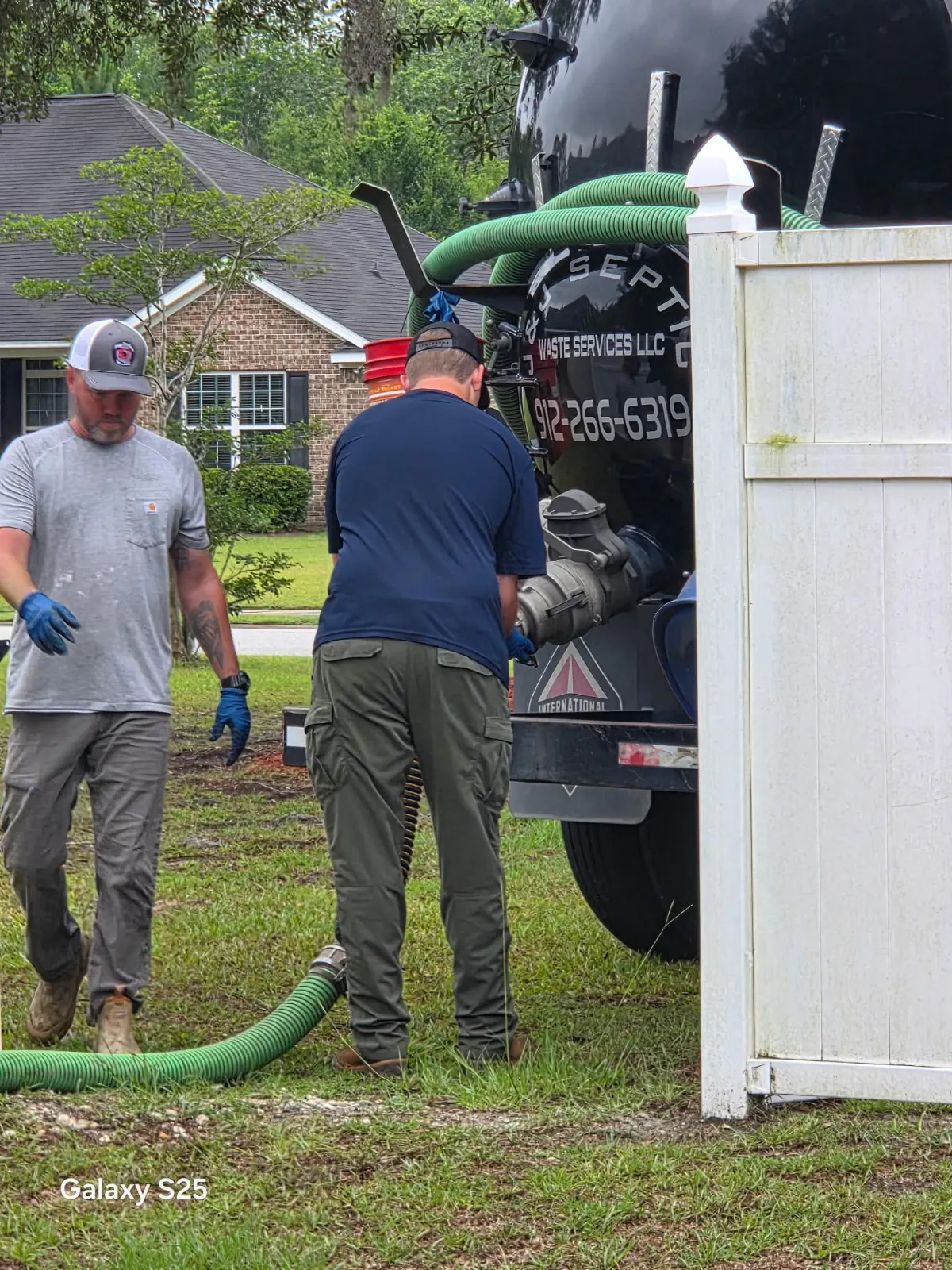
Start with the two credentials that matter most: licensing and insurance. Any company pumping tanks in Georgia should be able to explain who permits and regulates their work, and counties handle on-site sewage rules through their environmental health offices, so a legitimate hauler knows the local requirements without being asked. J&J Septic Waste Services LLC wrote this guide for customers in Ludowici.
Insurance is the other half. A pumper drives a heavy truck across your yard and works around a tank that can crack or shift. Ask to see a certificate of insurance before the truck shows up, not after something goes wrong.
Companies that do this work daily expect the question, and a straight answer here usually means the rest of the conversation will go the same way.
Ask where the waste goes after it leaves your tank
Everything that comes out of your tank is septage, and it has to go to a facility approved to receive it. Dumping it anywhere else is illegal and puts groundwater at risk, which matters in a town like Ludowici where a lot of families drink from their own wells.
Ask a simple question: where does the waste go once it leaves my property? A legitimate company answers without hesitation because they haul to approved treatment sites every week.
If the answer is vague or the subject changes, keep looking. Proper disposal protects your family and your neighbors, and it is one of the clearest lines between a real septic company and a fly-by-night truck.
Ask what a full pump-out actually includes
A proper pump-out is more than sucking out liquid. The crew should remove everything, including the settled solids at the bottom, then look at the tank while it is open. Baffles can break, lids can crack, and inlet lines can clog, and the only reliable time to spot those problems is when the tank is empty.
Before you book, ask what the pump-out includes. You want to hear about pumping the full tank, rinsing it down, and checking the baffles and the overall condition of the tank.
If the plan is a quick hose job with no look inside, solids stay behind and the tank fills back up faster, which means another pump-out sooner than you should need one. A complete pump-out protects you between visits.
Ask how they will locate and open your tank
Some Ludowici properties have risers sitting at the surface, and some have lids buried under grass nobody has touched in years. Ask the company how they handle that. Do they locate the tank before the truck arrives, and what happens if the lids are buried?
A prepared crew carries the tools to find and open buried lids, and they will tell you whether digging is part of the job up front.
If your tank has no risers, ask whether they recommend installing them so future pump-outs take minutes instead of an afternoon. Not sure where your tank sits in the first place? Our guide on finding your septic tank walks through five ways to locate it before anyone pulls a shovel.
Get the scope of the work in writing before the truck arrives
Before the truck rolls, get the scope of the work in writing or in a clear text message. It should spell out what the visit includes: pumping the full tank, rinsing, inspecting, resetting the lids, and leaving the site clean. Clear scope prevents the miscommunication that turns a routine visit into an argument in your driveway.
Also ask what happens if the crew finds something unexpected, like standing water in the tank or a cracked wall.
You do not need a legal document, just a plain description of what you are getting. Companies that put it in writing tend to do the work they wrote down.
Ask what happens if the crew finds a problem
Pumping sometimes uncovers bigger trouble: a broken baffle, roots in the line, a lid that crumbles in the crew's hands, or water backing into the tank from the drain field. A good company documents what it finds, explains what it means, and tells you what to do next without pressure.
Ask the question before the visit: if you find damage, what happens?
You should hear about photos, a clear explanation, and honest options, which sometimes means a separate inspection or a conversation about drain field repair rather than a same-day patch. A crew that shrugs and leaves you guessing is telling you to find another pumper.
Look for experience with coastal Georgia ground
Coastal Georgia throws specific conditions at septic systems: a high water table in low spots, sandy soil in some areas and denser clay in others, and long stretches of wet weather that soak a drain field. A pumper who works Long County roads every week knows how those conditions show up in local tanks.
Ask how long they have been pumping in this area and which towns they cover regularly. Someone familiar with Ludowici, Hinesville, and Jesup will recognize the common tank sizes and setups here instead of learning on your property.
Local familiarity does not guarantee good work on its own, but it stacks the odds in your favor when it is paired with everything else on this list.
Read recent reviews from Ludowici neighbors
Word travels fast in a town the size of Ludowici. Before you call, ask a neighbor or two who they use, and read recent online reviews with an eye for patterns. Consistent comments about showing up on time, explaining the work, and leaving the yard clean mean more than a single glowing paragraph.
Watch for how a company responds to a critical review, too. A business that answers a complaint calmly and offers to make it right is showing you how it will treat you when something goes sideways.
You are not looking for a flawless record. You are looking for a pattern of straight dealing across many different jobs and years.
Call first and listen to how they answer
One quick phone call tells you more than an hour of web browsing. Call the company, ask two or three of the questions above, and pay attention to the tone. Clear, patient answers are a good sign. Vague ones, or a hard push to book before you have asked anything, are not.
This is how we run things at J&J Septic Waste Services LLC. If you are in Ludowici or anywhere in Long County, our septic tank pumping team is glad to walk you through what a full pump-out includes and get you on the schedule at (912) 391-0083.
Asking good questions is your right as a homeowner, and the right company will welcome every one of them.
Ready to move forward? See our Septic Tank Pumping service
Related guides
- How Often Should You Pump Your Septic Tank?
- 10 Warning Signs Your Septic Tank Needs Pumping
- Septic Tank Pumping Cost in Hinesville, GA (2026 Guide)
- How Much Does It Cost to Pump a Septic Tank? (2026 Guide)
- What Not to Flush: The Septic System Do's & Don'ts
- How to Find Your Septic Tank (5 Quick Methods)
- The Best Time of Year to Pump Your Septic Tank in Coastal Georgia
Written by the J&J Septic Waste Services LLC team.
How to Choose the Right Septic Tank Pumping Company in Ludowici FAQs
How do I check that a septic pumping company is legitimate in Georgia?
Ask for proof of insurance and ask who handles their waste disposal. Georgia counties manage on-site sewage rules through environmental health offices, so a legitimate hauler can explain the local requirements. You can also call your county health department and ask about the company. A hauler who resists these simple questions is telling you what you need to know.
Do I need to be home during the pump-out?
Not always, but it helps. Being there means someone can point out the tank location, confirm the work was completed, and hear anything the crew found while the tank was open. If you cannot be home, ask the company to leave notes and photos of the tank's condition so you can review everything after the visit.
How long does a septic tank pump-out take?
It depends on tank size, how full the tank is, and how easy the lids are to reach. A tank with surface risers takes far less time than one with buried lids that need locating and digging. Ask the company what to expect for your specific setup before the truck comes out.
What should I do if the pumper finds damage in my tank?
Ask for photos and a plain explanation of what is wrong and what it means. Some problems, like a cracked lid or a broken baffle, can be addressed quickly. Others point toward the drain field and deserve a proper inspection before anyone starts repair work. Get the findings in writing so you can compare opinions if you get more than one.
Still have questions? Contact Us